
Written by the Clinical Team at Building Blocks Pediatric Therapy At Building Blocks, we share every parent’s passion for seeing your child live happily and independently. We partner closely with parents to support your child’s growth in ways that feel meaningful, respectful, and sustainable. Meet our team →
Updated: 08/30/26
ABA therapy, or Applied Behavior Analysis, is a structured, play-based approach that helps children build communication, social, and daily living skills by breaking big goals into small, manageable steps. If your child was just recommended for ABA, the first few weeks typically involve an initial assessment, meeting your child’s therapy team, and getting used to a new routine built entirely around what your child needs. It can feel like a lot at first, but here’s what to expect as you get started.
Key Takeaways
- ABA therapy helps children develop skills by understanding how behavior is learned and using that understanding to reinforce progress in consistent, individualized ways.
- Modern, ethical ABA is child-led, play-based, and built around the child’s natural interests rather than forced compliance. It looks very different from what critics of earlier ABA practice were describing.
- ABA can help children develop communication, social, self-care, and academic readiness skills, and can also address behaviors that interfere with daily life and learning.
- The first few weeks of ABA involve getting to know your child. No two programs look alike because no two children are alike.
Table of Contents
What is Applied Behavior Analysis?
Applied Behavior Analysis is a research-based approach to understanding how behavior works and using that understanding to support skill development in children with autism and other developmental needs.
The “applied” part means the approach is focused on skills that matter in real life: communication, social interaction, self-care, and daily routines. The “behavior analysis” part means therapists look carefully at what happens before and after a behavior, what prompts it and what reinforces it, so they can create conditions that support new skill development rather than just managing problems as they arise.
Cleveland Clinic’s overview of ABA therapy describes it as a research-based approach designed to increase positive behaviors and decrease behaviors that interfere with learning, while helping children build new skills and improve their social interactions. Decades of research support its effectiveness for children with autism.
It is worth naming honestly that ABA has a complicated history. Early forms of the approach used aversive techniques, including punishment, as a method of behavior change, and critics have raised valid concerns about approaches that prioritized forced normalization over the child’s wellbeing and autonomy. Modern, ethical ABA has moved significantly away from those origins. Good ABA today is child-led, play-based, and focused on helping a child thrive in ways that respect who they are rather than forcing them to perform neurotypicality. If you have concerns about this history, they are worth raising directly with any provider you work with.
What are the benefits of ABA therapy?
When it is well-designed and implemented by a skilled team, ABA can help children make meaningful progress in the areas of their lives that matter most to them and to their families.
Children who receive quality ABA therapy often develop stronger communication skills, including both verbal and non-verbal communication. They build social skills that help them connect with peers and participate in group settings. They develop greater independence in daily living routines like dressing, eating, toileting, and navigating their environment. And they often develop increased flexibility in response to changes in routine, which can significantly reduce the intensity of behavioral distress.
For families, the benefit is a child who has more tools and more confidence, and a home environment that has more support. ABA programs at Building Blocks involve parents directly in the process, not as observers but as partners, so the skills being built in sessions are supported and generalized at home.
What skills can ABA therapy help develop?
ABA can address a wide range of developmental areas, and the specific goals are determined by your child’s individual profile rather than a standard curriculum.
Communication and language: including requesting, labeling, asking and answering questions, using language functionally in social contexts, and for some children, building alternative communication systems when verbal speech is not yet accessible.
Social skills: initiating and maintaining interactions, playing with peers, understanding social cues, taking turns, and navigating the social landscape of school and community settings.
Adaptive daily living: dressing, undressing, toileting, mealtime skills, handwashing, and the routines that support greater independence at home and in the community.
Academic readiness: attending to a task, following multi-step directions, pre-literacy and pre-numeracy concepts, and the executive function skills that support learning in a classroom environment.
Reducing behaviors that interfere with learning: behaviors like self-injury, aggression, or intense avoidance are addressed by understanding their function and building alternative skills that meet the same underlying need, rather than through punishment or suppression.
What does an ABA program involve?
It starts with a thorough assessment, not with treatment.
Before any intervention begins, a Board Certified Behavior Analyst (BCBA) spends time getting to know your child: assessing their current skills across multiple domains, interviewing you about your child’s strengths, challenges, routines, and goals, and directly observing your child in natural settings. This assessment is the foundation of the individualized treatment program.
From that assessment, the BCBA develops a specific program with measurable goals, each broken into the small, teachable steps that ABA is built around. A behavior technician, sometimes called a registered behavior technician or RBT, works directly with your child during sessions, implementing the program under the BCBA’s regular supervision.
Data is collected during every session on your child’s progress toward each goal. That data is reviewed regularly by the supervising BCBA, who adjusts the program as your child progresses. The program is not static. It evolves as your child does.
Building Blocks’ ABA therapy services in Michigan are built around exactly this individualized, data-driven model, with regular collaboration across the ABA, speech, occupational, and feeding therapy teams so that the full picture of your child’s development is always part of the clinical conversation.
What does a typical ABA session look like?
Considerably more like playing than like worksheets, particularly for younger children.
Ethical, modern ABA is built around the child’s natural motivations, interests, and learning style. If your child loves trains, the session involves trains. If they love music, music is part of how skills are practiced. The structure is there, but it is embedded in engagement rather than imposed on top of it.
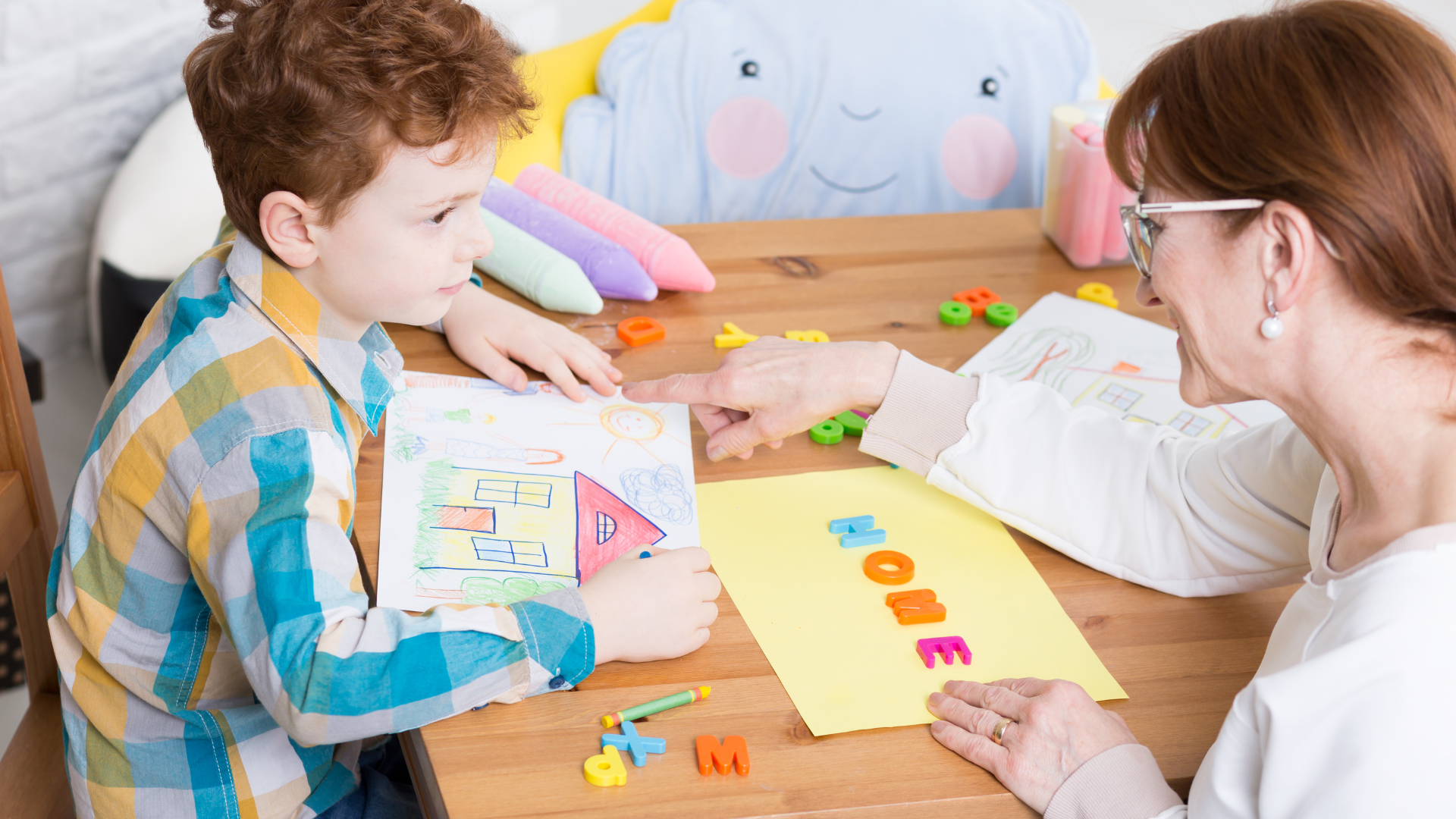
A session typically begins with a brief check-in and setup, then moves into a combination of structured teaching moments, naturalistic teaching embedded in play, and reinforcement of skills the child is working on. The behavior technician is a warm, consistent presence who has spent significant time learning what makes your child feel safe, engaged, and successful.
Parents are often included in part of the session, particularly as a child begins therapy, and regular parent training is built into the program. The skills your child is developing in sessions need to be practiced and reinforced in everyday contexts, and you are the person best positioned to make that happen.
How long will my child need ABA therapy?
This is one of the most common questions families have, and the honest answer is that it varies considerably.
Duration depends on the child’s age, the nature and intensity of their needs, the specific goals of the program, and how quickly progress occurs. Some children receive intensive services, twenty or more hours per week, for several years. Others receive a lower intensity of services over a shorter period. The program is reviewed regularly and adjusted based on your child’s progress, with the goal of building toward as much independence as possible rather than creating indefinite dependency on services.
The transition planning that happens toward the end of ABA services is as important as the beginning. A good ABA program does not just help your child develop skills in the therapy context. It builds toward those skills transferring to school, home, and community, so that the progress is durable.
Have questions about what ABA therapy could look like for your child? Our Metro Detroit team is here to walk you through it.
FAQ
How many therapists will be working with my child?
Typically one supervising BCBA and one primary behavior technician who works directly with your child during sessions. Depending on the intensity of services and your child’s schedule, there may be more than one behavior technician involved, particularly if sessions span multiple times of day or week. The BCBA oversees the whole program and meets with you regularly to review progress and adjust goals. At Building Blocks, the ABA team also coordinates with any speech, occupational, or feeding therapists working with your child so that care is integrated rather than siloed.
At what age should a child start ABA therapy?
ABA can be effective across a wide age range, and research supports early intervention as producing significant benefits. Many children begin ABA services between ages two and five, when the developing brain has significant neuroplasticity and early skill-building can produce large downstream effects on communication, social development, and independence. That said, ABA is not only for young children: older children, adolescents, and even adults can benefit from well-designed ABA programs tailored to their developmental level and goals.
What are common misconceptions about Applied Behavior Analysis?
The most significant misconception is that ABA is inherently punitive or focused on suppressing who a child is. This comes from the field’s complicated history with aversive techniques, but does not describe ethical, modern ABA. Good ABA today is focused on skill-building, uses positive reinforcement rather than punishment, and is designed around the child’s interests and natural learning style. Another common misconception is that ABA is only about behavior management in a narrow sense. In practice, it addresses communication, social skills, daily living, and academic readiness alongside behavioral concerns.
How is progress evaluated?
Progress is tracked through data collected during every session. The behavior technician records your child’s responses to each target skill across each session, and the supervising BCBA reviews that data regularly to assess whether the child is making expected progress, whether goals need to be adjusted, and whether the instructional approach is working. Parents receive regular updates on their child’s progress, and formal program reviews happen on a scheduled basis. You should never feel like your child’s progress is a mystery. Transparency about what the data shows is a core part of the program.
About Building Blocks Pediatric Therapy
At Building Blocks Pediatric Therapy, we know that starting ABA therapy can feel like a big unknown for families. That’s why our approach is built around your child, not a one-size-fits-all program. Every plan is designed by our team to reflect how your child learns, communicates, and plays best. As a family-owned practice serving Metro Detroit, we also believe therapy works best when it doesn’t happen in a silo. Our ABA, speech, occupational, and feeding therapists collaborate closely, so if your child is receiving more than one type of support, your care team is always on the same page.


