
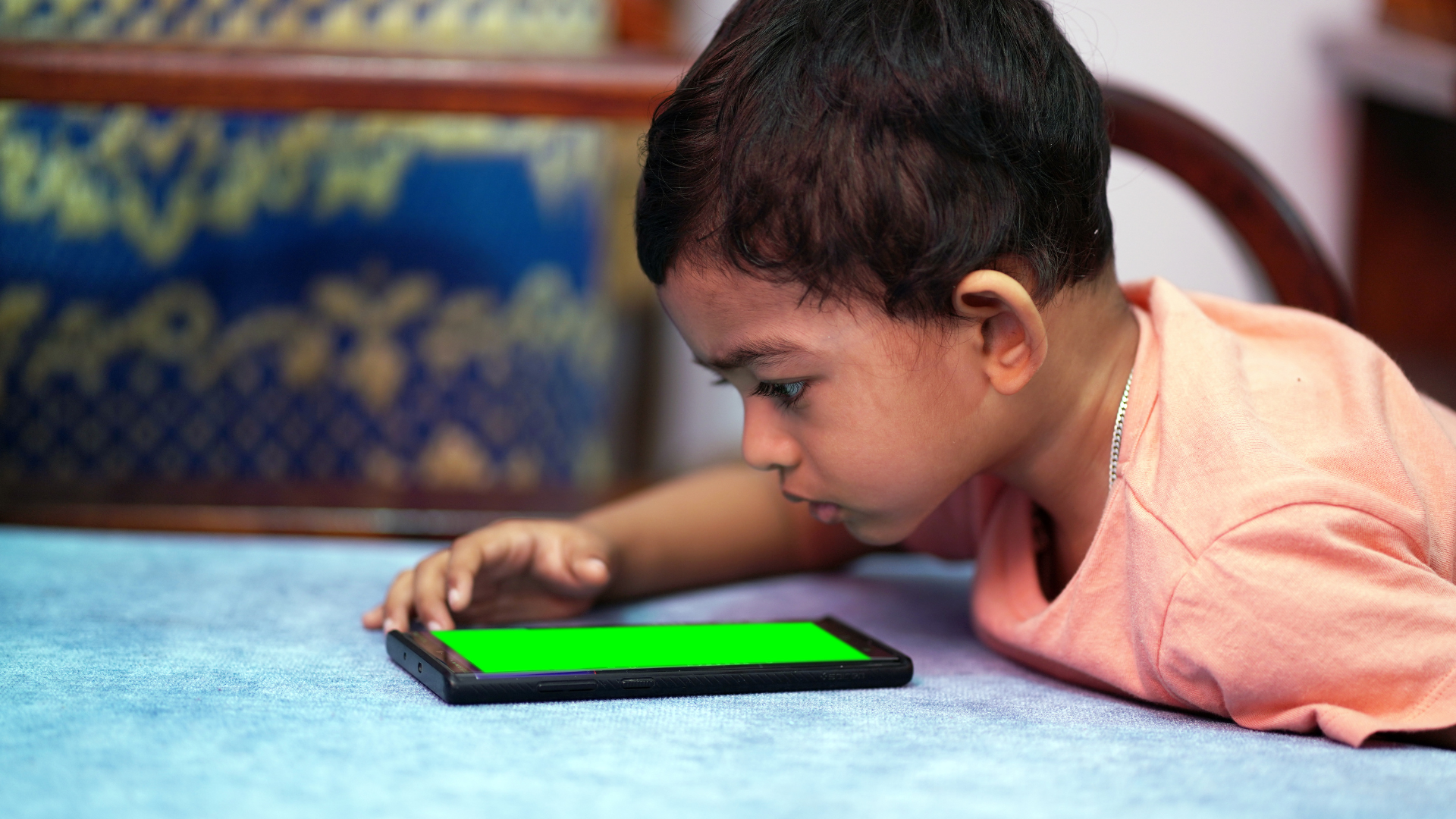
Summer break arrives and, almost immediately, the screens come out.
It happens in every household. The structure of the school day disappears, the days stretch long, and tablets and televisions quietly become the default way to fill the space in between. For parents of autistic children, this shift can bring a particular kind of tension. You want your child to rest and enjoy their summer.
You also don’t want to spend three months in a battle over the remote.
The conversation around screen time and autism is one that comes up constantly in our work with families, and there’s a lot of noise around it. Some of it helpful, some of it not. So let’s clear some things up and talk about what actually matters.
There is no research that establishes screen time as a cause of autism. Full stop. Autism is a neurodevelopmental condition shaped by genetics and early brain development, not by how many hours a child spends watching videos. If you’ve come across messaging that suggests otherwise, it isn’t supported by the evidence, and it’s worth setting it down entirely.
What is worth thinking about is something different: not whether screens cause anything, but how screen use fits into the broader rhythm of your child’s life, particularly during a season when external structure has mostly fallen away.
For autistic children, screens often serve real and legitimate functions. They can be deeply regulating. A familiar show or game provides predictability in a world that frequently doesn’t. For children who find social interaction exhausting, solo screen time can be genuinely restorative. Some children use screens to pursue intense interests in ways that are actually meaningful and cognitively rich. Others use them to decompress after a long day of managing sensory input.
None of that is inherently a problem.
The tension around screen time and autism tends to arise not from the screens themselves but from what happens when screen time crowds out everything else. Sleep. Movement. Face-to-face connection. Time outdoors. Meals at a table. When those things start to disappear, you notice it. The regulation that screens were supposed to support starts to erode instead.
That’s the real conversation worth having with yourself as a parent: not “how much is too much” as an abstract number, but “what is screen time replacing in my child’s day right now, and is that okay?”
Summer is genuinely hard for this reason.
Without the school day providing a built-in framework, screen time and autism can become a pressure point very quickly, because screens are always available, always appealing, and always easier than the alternatives in the short term.
What tends to help is building the structure that summer removed rather than trying to police screen use directly. When a child’s day has anchor points, physical activity, mealtimes, time outside, and something to look forward to, screens tend to find their natural place rather than expanding to fill every available hour.
This doesn’t require a rigid schedule or a complicated system.
It requires a few consistent touchpoints across the day that the child can count on. A morning walk before screens come on. An afternoon activity that’s non-negotiable. A wind-down routine in the evening that doesn’t involve a bright screen. These aren’t punishments or restrictions. They’re the shape of a day, and autistic children in particular tend to thrive when the day has shape.
Transitions away from screens are often the hardest part, especially for children who become deeply absorbed in what they’re watching or playing.
This is worth acknowledging honestly rather than treating as defiance. The capacity to shift attention is genuinely more difficult for many autistic children, and abruptly ending screen time without warning sets everyone up for a hard moment. Consistent transition rituals, a five-minute warning, a visual timer, a clear and predictable “what comes next,” make the handoff smoother over time.
It also helps to think about screens not as a single category but as a range of very different experiences.
Watching the same episode of a familiar show for the fifteenth time is a different activity than playing an interactive problem-solving game. Scrolling through short videos is a different activity than following along with a nature documentary about a deep interest. Passive, high-stimulation content for extended periods tends to be harder on the nervous system than slower, more predictable, or more interactive content.
This isn’t about judging one type of screen use against another. It’s about noticing what your child’s body and behavior look like after different kinds of screen time and using that information. Some children are calmer and more available for connection after a predictable show. Others are more dysregulated. You know your child. That knowledge is data.
The research on screen time and autism suggests that the quality and context of screen use matters as much as the quantity. Watching something together, talking about it, connecting it to an interest, or using it as a bridge to another activity gives screen time a different weight than passive solo consumption with no interaction around it.
For families navigating this in real time during summer, a few things consistently make a difference.
Co-viewing when possible. Sitting with your child during screen time, even briefly and even silently, changes the nature of the activity. You’re present. That matters to a child’s nervous system more than we often realize.
Keeping mornings mostly screen-free. The first part of the day sets a tone. Children who start their morning with movement, a meal, and some face-to-face time tend to be more regulated across the whole day, which paradoxically makes screen time later on less of a flashpoint.
Protecting sleep above everything else. The relationship between screen time and autism-related sleep difficulties is an area where the research is fairly consistent: bright screens close to bedtime disrupt melatonin production and make it harder for already sleep-sensitive children to settle. A screen-free wind-down window of at least thirty minutes before bed is one of the most protective things you can build into a summer routine.
Letting go of guilt about the days that don’t go as planned. Summer is long. There will be days where screens do more work than you’d like because someone is sick, or exhausted, or the afternoon falls apart. That’s not a failure. That’s a family.
The goal with screen time and autism isn’t elimination. It’s integration. Screens as one part of a rich, balanced summer rather than the thing the whole day orbits around.
Your child deserves a summer that includes rest and comfort and the shows they love. They also deserve movement, connection, fresh air, and the particular kind of joy that comes from being bored for a few minutes and then finding something to do about it.
Both things can be true. You don’t have to choose between a child who is happy and a child who is healthy. You just have to be a little intentional about the shape of the days.
At Building Blocks Pediatric Therapy, we support families of autistic children through every season, including the long ones. If screen time and autism dynamics are creating tension in your home this summer, or if you’re looking for practical strategies to build more balance into your child’s days, we’re here to help.
Reach out today to learn about our services here at Building Blocks Pediatric Therapy.
source: https://my.clevelandclinic.org/health/diseases/14814-developmental-delay-in-children


