
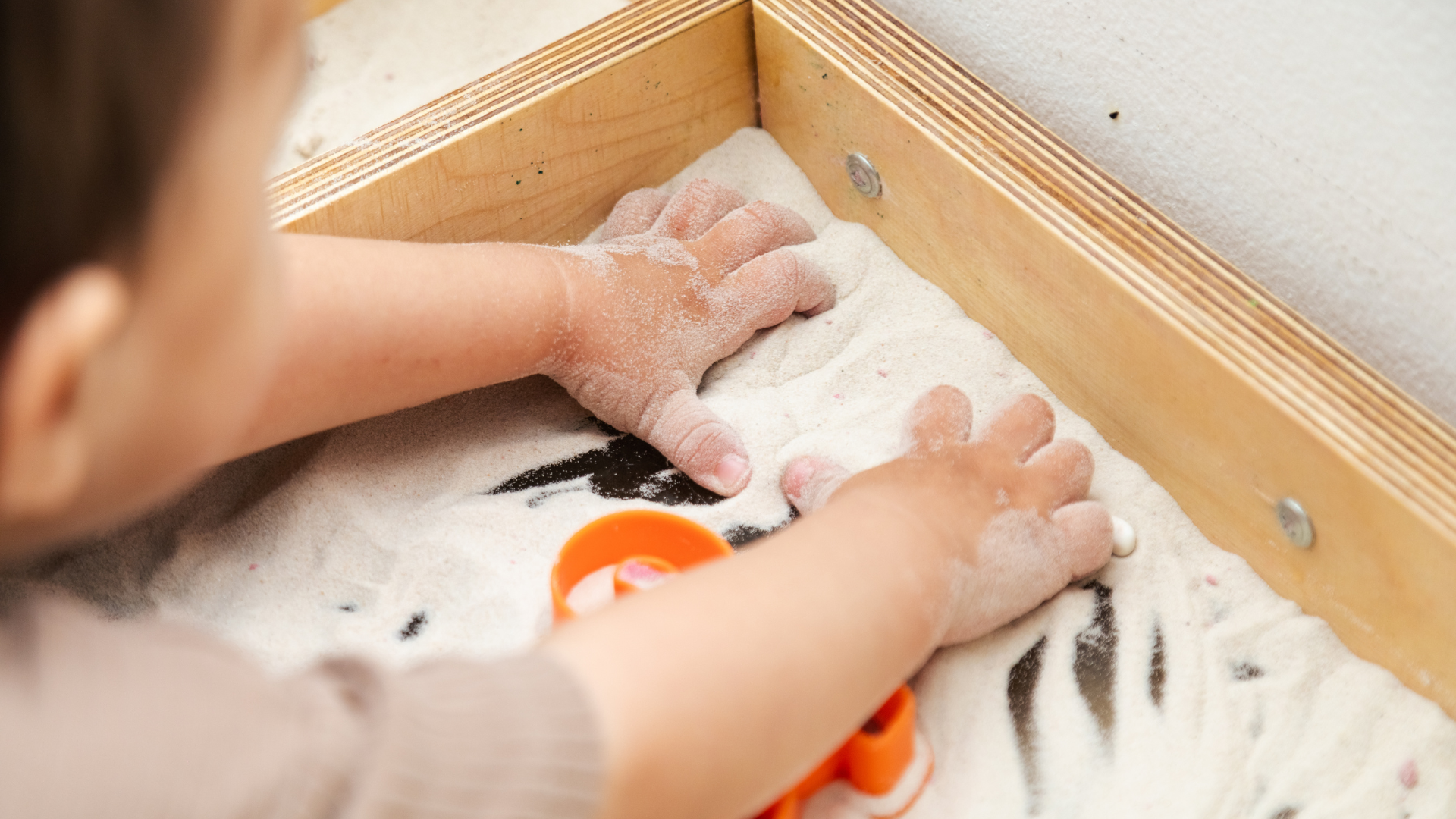
Summer and toddlers are a natural match. Big skies, bare feet, water from a hose, dirt that gets everywhere. There’s a reason kids light up the moment you open the back door.
But for toddlers with sensory processing differences or autism, that same outdoor world can feel overwhelming just as easily as it feels exciting. The sounds are louder out there. The textures are unpredictable. The heat, the light, the bugs, the grass underfoot. It’s a lot of input, coming from everywhere at once.
The answer isn’t to keep them inside. It’s to meet them where they are and build experiences that work with their nervous system instead of against it.
Sensory activities for toddlers don’t need to be elaborate, expensive, or perfectly Pinterest-worthy. They just need to be intentional. And summer outside is one of the richest sensory environments you have access to, completely free.
Here are ten to try.
What are some good sensory activities for toddlers?
The best sensory activities for toddlers are the ones that invite exploration without demand. You’re not asking your child to perform or produce anything. You’re just opening a door and seeing what happens.
- Mud kitchen play
A container, some dirt, a little water, and a few old spoons.
That’s it. Mud kitchen play is one of the most naturally regulating outdoor activities for toddlers because it’s deeply tactile without being unpredictable. Your child controls the consistency, the pace, and exactly how much mess they make. For kids who are tactile seekers, this is heaven. For kids who are tactile avoiders, it’s a low-pressure invitation to approach a new texture on their own terms. Start with dry dirt and let them add water slowly if they choose.
- Water table or bin play
Water is one of the most universally regulating sensory inputs there is.
Fill a bin, a plastic storage tub, or even a shallow tray with water and let your child explore. Add cups for pouring, rocks for sinking, leaves for floating. Temperature matters here. Lukewarm water tends to be most calming. Colder water can be alerting and fun for kids who need more input. Watch what your child gravitates toward and follow their lead.
- Barefoot grass walking
This one sounds almost too simple, but for many toddlers with sensory sensitivities, the feeling of grass underfoot is genuinely challenging.
Which makes it worth practicing in small, supported doses. Sit with your child on the edge of a blanket and let them dip their toes in. Narrate what you feel. Make it playful, never forced. Over time, what once felt threatening can become familiar and even enjoyable. Small exposures, repeated gently, build tolerance.
- Nature texture scavenger hunt
Gather a small basket and head outside to collect things with interesting textures: smooth stones, rough bark, soft leaves, a feathery weed, a bumpy pinecone.
The game isn’t about identifying them correctly. It’s about touching, comparing, and noticing. This is one of those sensory activities for toddlers that sneaks language development and sensory exploration into the same five minutes without either one feeling like work.
- Sprinkler or hose play
Moving water adds a proprioceptive and tactile layer that a still bin doesn’t.
The unpredictability of a sprinkler can be exciting or overwhelming depending on your child, so start with a gentle hose stream they can control themselves. Let them point it at their feet, at a patch of dirt, at a cup. Control is regulating. Once they feel safe, the delight tends to take over.
What are some fun 5 senses activities?
Good sensory play doesn’t always focus on just one sense. The richest outdoor experiences tend to layer several together, which is actually how the real world works and how kids learn to integrate input over time.
- Barefoot nature walk with narration
Take a slow walk without a destination. Notice what you hear: birds, wind, a lawnmower in the distance. Notice what you smell: cut grass, sunscreen, something blooming. Feel the different surfaces underfoot as you move from pavement to grass to mulch. Stop and look at things close up. This is five senses activities in their most natural form, and it’s also one of the best things you can do for language development in toddlers. You’re giving them the words for their experience in real time.
- Frozen sensory bin
Fill a bin with water, add small toys, flowers, or leaves, and freeze it overnight. In the morning, bring it outside and let your child explore with their hands, with cups of warm water, with wooden mallets if they’re ready for that. The visual of the trapped objects is captivating. The cold is alerting. The process of melting and uncovering engages problem-solving alongside sensation. This one tends to hold attention longer than almost any other sensory activities for toddlers on this list.
- Bubble play with variations
Bubbles are a classic for good reason. They’re visual, tactile when they land on skin, and carry a built-in social element when you blow them toward each other. But you can layer in more sensory richness by making giant bubbles with a rope wand, letting your child try to pop them with different body parts, or blowing bubbles onto a dark piece of paper to see the patterns they leave behind. Each variation introduces a new sensory experience through the same familiar, safe framework.
What are sensory play activities?
Sensory play is any activity that deliberately engages one or more of the senses in a way that supports exploration, regulation, and development. It’s not therapy in the clinical sense, though it absolutely supports therapeutic goals. It’s play that happens to do something meaningful underneath the surface.
For toddlers with autism or sensory processing differences, sensory play matters for a few specific reasons. It builds tolerance for inputs that might otherwise feel threatening. It gives the nervous system practice at receiving and integrating information. It creates a shared language between you and your child, a way of connecting that doesn’t depend entirely on words.
Here are two more to round out your summer list.
- Digging and planting
Give your child a small patch of earth, a shovel sized for their hands, and something to plant. Seeds work. A single flower from a garden center works. What matters is the digging, the feeling of soil, the watering that follows. Gardening is one of the most complete sensory activities for toddlers because it touches nearly every sense across a sustained period of time.
And it has an end product, something growing, that provides a different kind of satisfaction than play that doesn’t leave a trace.
- Chalk drawing on different surfaces
Sidewalk chalk on pavement feels different from chalk on a brick wall, a wooden fence, or a large flat rock. Let your child experiment with the same familiar tool across different surfaces and notice how their approach changes. The resistance, the sound, the visual result all vary. For kids who need predictability before they can explore, chalk is a wonderful bridge: it’s familiar enough to feel safe and varied enough to stay interesting.
It’s also one of the easiest sensory activities for toddlers to revisit every single day without it feeling repetitive.
A note on following your child’s lead
Every item on this list is a starting point, not a prescription. Some kids will dive straight into the mud. Others will observe from a careful distance for three sessions before touching anything, and that’s not failure. That’s their nervous system doing exactly what it’s supposed to do.
Your job in sensory play isn’t to make your child feel everything or tolerate everything. It’s to be present, to narrate, to make the environment feel safe, and to celebrate whatever level of engagement your child brings.
The outdoor world has so much to offer. This summer, you don’t need a curriculum or a kit. You need a patch of ground, a curious kid, and a little time.
At Building Blocks Pediatric Therapy, our team supports toddlers and families navigating sensory differences every day. If you’re looking for guidance on how to extend what happens in therapy into your home and backyard, we’d love to connect.
Reach out to Building Blocks today. Play is powerful, and you don’t have to figure out how to use it alone.
Reach out today to learn about our services here at Building Blocks Pediatric Therapy.
source: https://my.clevelandclinic.org/health/diseases/14814-developmental-delay-in-children


