
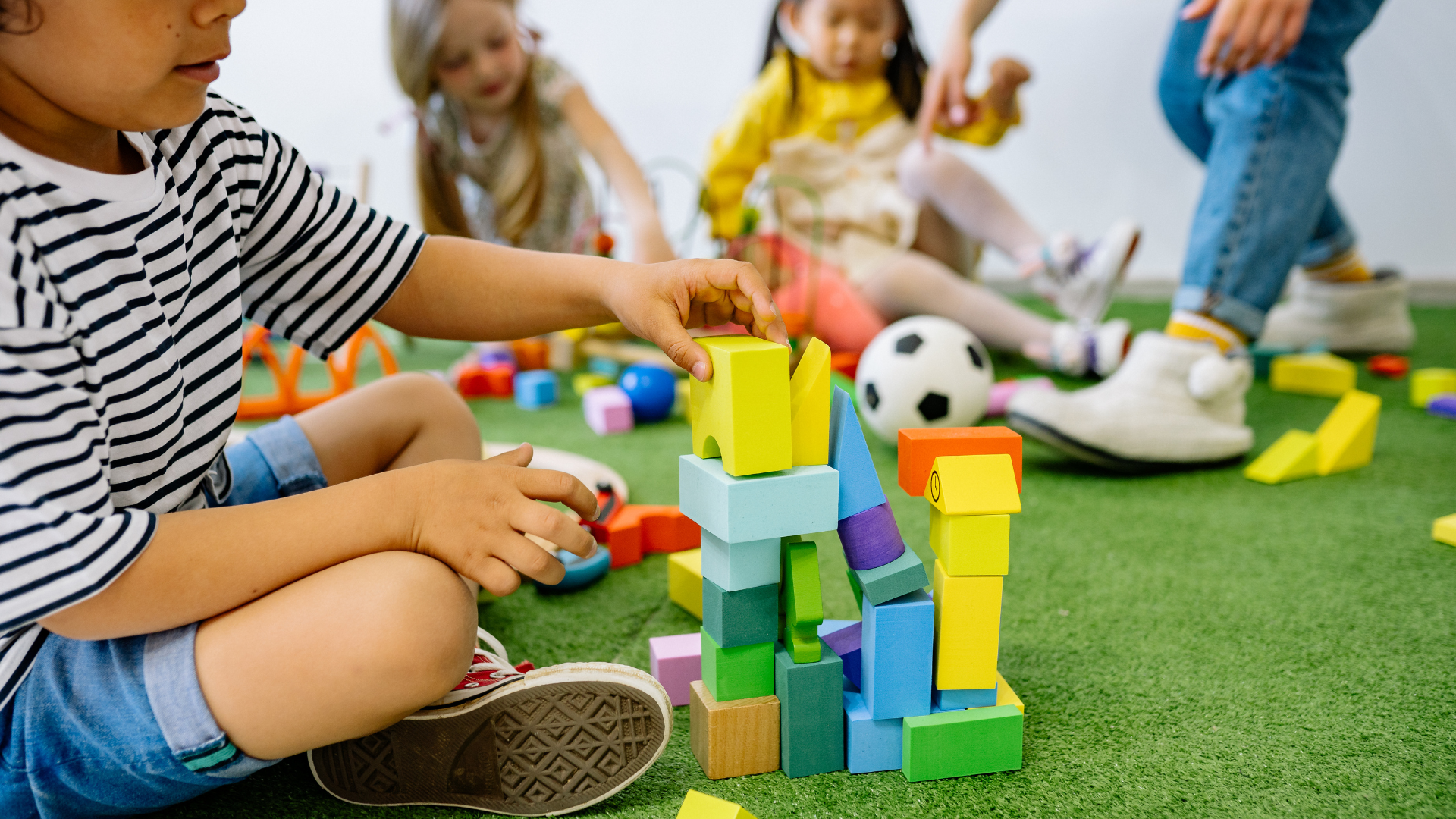
Every parent has been there. You’re at the playground, and your child is standing alone while other kids are playing together. Or maybe they’re interrupting conversations without realizing it. Or struggling to share toys.
And you start wondering, is this normal? Should I be worried?
Understanding social skills for kids can feel confusing because every child develops at their own pace.
What’s typical for one five-year-old might be different for another. But knowing what to look for and when to seek support can make all the difference in helping your child build the connections they need.
At Building Blocks, we help families navigate these questions every day. Let’s talk about what social skills for kids really look like, why they matter so much, and how children learn to navigate their social world.
What Are Some Social Skills for Children?
When we talk about social skills for kids, we’re really talking about a whole toolkit of abilities that help children connect with others.
These aren’t just “nice to have” skills. They’re the foundation for friendships, learning, and navigating the world.
Communication skills are a huge part of this. Can your child start a conversation? Do they take turns talking and listening? Can they ask for what they need? These seem simple, but they’re actually pretty complex skills that develop over time.
Reading social cues is another big one. This means understanding facial expressions, body language, and tone of voice. When someone crosses their arms and looks away, your child is learning that might mean the person is upset or uninterested. When a friend smiles and leans in, that usually means they’re engaged and happy.
Sharing and cooperation are classic social skills for kids that parents often focus on. Learning to take turns, share toys, and work together on projects are all part of how children build friendships and function in groups.
Emotional regulation matters too. Can your child calm down when they’re upset? Do they know how to handle frustration without hitting or yelling? This self-control is essential for maintaining friendships and doing well in school.
Problem-solving with others is a skill that develops throughout childhood. When two kids both want the same toy, can they find a solution? When there’s a disagreement on the playground, can they work through it?
Respecting boundaries is increasingly important as kids grow. Understanding personal space, knowing when someone wants to be left alone, and recognizing when a joke has gone too far are all part of healthy social development.
The thing is, all of these social skills for kids develop at different rates. Some children naturally pick up on social cues early. Others need more time and practice. And that’s okay.
Why Are Social Skills for Kids Important?
You might be thinking, “Sure, being friendly is nice, but is it really that important?” The short answer? Absolutely.
Friendships shape happiness. Think about your own life. The relationships you have probably bring you some of your greatest joy. The same is true for kids. Having friends to play with, share secrets with, and lean on makes childhood richer and more fun.
Social skills predict academic success. This surprises some parents, but it’s true. Kids who can work in groups, ask for help when needed, and manage their emotions in class tend to do better in school. Learning isn’t just about absorbing information. It’s also about participating, collaborating, and navigating the social environment of a classroom.
Emotional health depends on connection. Children who struggle with social skills for kids often experience loneliness, anxiety, or low self-esteem. When kids feel disconnected from their peers, it hurts. Building strong social skills gives them the tools to form meaningful relationships that support their emotional wellbeing.
Future success relies on these skills. Whether your child grows up to be a teacher, engineer, artist, or anything else, they’ll need to work with other people. Job interviews, team projects, networking, even just being a good neighbor all require social skills that start developing in childhood.
Safety matters too. Kids with strong social skills are better at recognizing unsafe situations, saying no when they need to, and asking trusted adults for help. They’re more likely to notice when something feels wrong and speak up about it.
The benefits of strong social skills for kids extend into every area of life. That’s why at Building Blocks, we put so much emphasis on helping children develop these crucial abilities.
How Can Kids Learn Social Skills?
Here’s the good news. Social skills for kids aren’t something you either have or don’t have. They’re learned. And that means they can be taught, practiced, and improved.
Modeling is powerful. Kids learn by watching. When you say “please” and “thank you,” your child learns manners. When you listen without interrupting, they learn conversation skills. When you apologize after making a mistake, they learn accountability. You’re teaching social skills every single day through your own behavior.
Practice makes progress. The more opportunities kids have to interact with others, the more they learn. Playdates, family gatherings, sports teams, and group activities all give children chances to practice social skills for kids in real situations. Yes, it might be messy sometimes. They’ll make mistakes. But that’s how learning happens.
Role-playing helps. This is one of our favorite techniques at Building Blocks. Acting out social situations at home gives kids a safe space to practice. You can role-play introducing themselves to a new friend, asking to join a game, or handling teasing. When they’ve practiced at home, real situations feel less scary.
Reading books together is surprisingly effective. Stories show characters navigating friendships, solving conflicts, and experiencing emotions. Talking about what characters are feeling and why they made certain choices helps kids develop empathy and social understanding.
Coaching in the moment works well too. When you see your child struggling socially, gentle guidance can help. “I notice Sam looks sad. What do you think happened?” or “Let’s think of another way to ask for a turn.” You’re not solving the problem for them, you’re helping them think through it.
Games teach turn-taking and rule-following in a fun way. Board games, card games, and team sports all require social skills for kids like patience, cooperation, and handling winning or losing gracefully.
Structured activities can be especially helpful for kids who find unstructured social time overwhelming. Art classes, music lessons, or sports teams give kids a shared activity to focus on, which makes socializing feel more natural.
Teaching specific strategies works for many children. Things like “look at the person when they’re talking,” “wait for a pause before speaking,” or “ask a question to show you’re interested” give kids concrete tools to use.
Celebrating small wins matters more than you might think. When your child shares without being asked, or includes someone new in a game, pointing it out reinforces that behavior. “I noticed you let Maya choose the game. That was really kind.”
When Should You Seek Support?
Most kids have ups and downs with social skills. That’s completely normal. But sometimes, children need extra support to develop these abilities.
You might consider reaching out for help if your child consistently struggles to make or keep friends, seems unaware of social cues that other kids their age pick up on, has frequent conflicts with peers, avoids social situations entirely, or doesn’t seem to enjoy interacting with other children at all.
Also, if your child’s social challenges are affecting their happiness or self-esteem, that’s a sign that support could help.
You know your child best. If something feels off, trust your instincts.
At Building Blocks, we work with children on developing social skills for kids through play-based therapy, social skills groups, and family coaching. We meet each child where they are and help them build confidence in their ability to connect with others.
Moving Forward
Social skills for kids aren’t about forcing your child to be someone they’re not.
An introverted child doesn’t need to become the life of the party. A quiet kid doesn’t need to be chatty. The goal is helping every child feel comfortable and confident in social situations, whatever that looks like for them.
Some children will always prefer one close friend to a big group. Some will love performing in front of crowds. Some will be natural leaders, others happy followers. All of these are perfectly okay.
What matters is that your child has the tools they need to form meaningful connections, express themselves, and navigate their social world in a way that feels good to them.
If you’re worried about your child’s social development, you’re not alone. So many parents share these concerns. And the fact that you’re here, reading this, trying to understand how to help? That says everything about the kind of supportive parent you are.
Your child is lucky to have you in their corner.
Reach out today to learn about our services here at Building Blocks Pediatric Therapy.
source: https://my.clevelandclinic.org/health/diseases/14814-developmental-delay-in-children


