
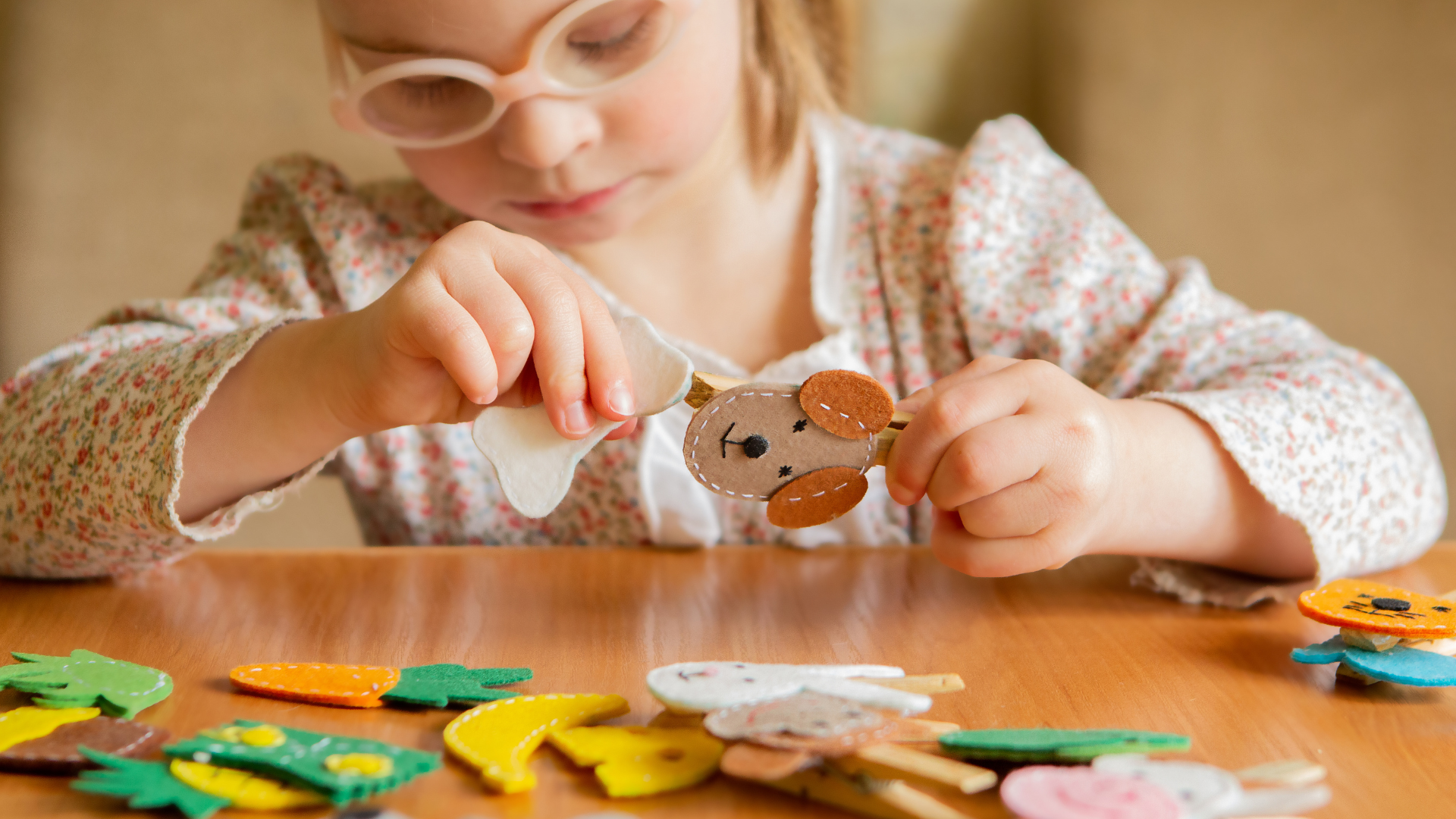
Your child struggles to hold a crayon. Buttoning their shirt takes forever. Using scissors? Forget about it.
Meanwhile, you’re watching other kids their age do these things without even thinking about it, and you’re wondering what’s going on.
We get it. It’s frustrating for everyone. Your child knows exactly what they want to do, but their hands just won’t cooperate.
And you’re standing there wanting so badly to help, but you’re not quite sure where to start.
Here’s what we’ve learned from working with families at Building Blocks for years. Fine motor skills are one of those things that look simple from the outside but are actually pretty complicated. And some kids? They just need more help figuring them out. The thing about fine motor skills is they touch almost everything kids do during the day.
Let’s dig into what’s really going on and what you can actually do about it.
What Are Fine Motor Skills?
Okay, so fine motor skills are basically all those small movements we make with our hands and fingers.
The precise, coordinated stuff that lets us pick things up, hold things, and actually do stuff with our hands. When people talk about fine motor skills, they’re talking about everything from holding a pencil to buttoning a coat.
Just think about your morning routine.
You button your shirt, tie your shoes, brush your teeth, use a fork at breakfast, maybe type on your phone. Opening that stubborn jar of peanut butter? Fine motor skills. Flipping through a magazine? Yep, that too. We use them constantly without even thinking about it.
Little kids are building these skills from day one. That baby grabbing at a rattle? Building fine motor skills. Your toddler knocking over that block tower for the millionth time? Actually learning something. The preschooler butchering a piece of paper with safety scissors? They’re getting there.
Here’s the thing though.
These movements might look easy once you’ve got them down, but they’re actually really complex. Your hands need to coordinate with what your eyes are seeing. Your fingers need to be strong enough. Both hands often need to work together. And your brain needs to plan out the whole sequence of movements before you even start.
That’s a lot happening all at once.
Why Do Some Kids Struggle with Fine Motor Skills?
So here’s where it gets tricky. Not every kid develops these skills on the same timeline. Some kids are naturally good with their hands early on. Others? They need way more time and practice. And then some kids have specific things going on that make developing fine motor skills harder.
Sometimes it’s a developmental delay. If a child’s development is moving a little slower overall, their hand skills might be lagging too.
It doesn’t mean something’s terribly wrong. They just need some extra help and more time to get there.
Now, kids with autism often have a tougher time with fine motor skills. We see this a lot. The research backs it up too.
Many kids with ASD struggle with planning movements and getting their bodies to do what they want. So things like writing, using a fork and knife, or building with small toys can be genuinely hard. And listen, it’s not about how smart they are or how hard they’re trying. Their brains just process these movements differently. Fine motor skills development just works differently for them.
Sensory stuff can mess with fine motor skills too. We’ve worked with kids who hate how certain textures feel, so they avoid playing with playdough or finger painting, which would actually help build their fine motor skills.
Other kids don’t get enough feedback from their hands to really know where their fingers are or how hard they’re pressing.
Some kids have low muscle tone in their hands. Their grip is weaker, so holding a pencil or squeezing things wears them out fast. You’ll notice these kids give up on fine motor activities pretty quickly because their hands literally get tired.
Then there’s visual-motor integration. Basically, the kid sees what needs to happen, but their hands don’t get the memo. The connection between eyes and hands isn’t working smoothly.
And honestly? Sometimes there’s no big reason. Some kids just need more practice and help than others. That’s life.
What Does It Look Like When Fine Motor Skills Are Hard?
You’ll probably notice it in everyday stuff. Your kid avoids coloring. Art projects? No thanks. Getting dressed in the morning turns into this whole ordeal that takes three times longer than it should. They might only want to eat chicken nuggets and fries because, let’s be honest, those don’t require much fork work.
At school, their handwriting looks like a disaster, and you can tell it’s exhausting for them.
They can’t keep their desk organized because zippers and buckles and little clasps are just too much. Their teacher might mention that they struggle with scissors or can’t seem to finish art projects.
At home, you see the frustration building. They’ll start building something with Legos and then boom, pieces flying across the room because it’s not working. Puzzles get abandoned after two minutes. They ask you to do things that you know other kids their age handle on their own.
For kids with autism, you might see this pattern where they’re really good at some things but completely struggle with anything involving hand coordination. That’s super common. It doesn’t mean they can’t get better, it just means they need help in specific areas.
How Fine Motor Skills Usually Develop
Look, I’m going to give you some typical milestones, but please remember that these are just rough guidelines. Kids are all over the map with this stuff.
Babies start by swatting at things hanging over their crib, then eventually figure out how to actually grab stuff. By around their first birthday, most can do that cute pincer grasp thing where they pick up Cheerios with their thumb and finger.
Toddlers get into everything. They’re stacking blocks, scribbling all over your walls with crayons, turning pages in books (sometimes ripping them, oops). They’re figuring out the basics.
Preschoolers (roughly 3 to 5) are usually cutting with scissors, drawing circles and maybe some wonky squares, threading big beads onto string, possibly writing some letters. This is when fine motor skills really start clicking for a lot of kids.
School-age kids work on their handwriting, finally learn to tie their shoes (hallelujah), and can handle more complicated stuff like playing piano or building elaborate Lego sets.
If your kid isn’t hitting these milestones right on schedule, don’t panic. Seriously. But it might be worth getting them some extra support.
What Actually Helps
Good news. Fine motor skills aren’t set in stone. Kids can get better at this stuff with practice and the right kind of help. Building fine motor skills takes time, but there are so many ways to help.
Play is honestly the best therapy. We mean it. Playdough, finger painting, blocks, beads, water play, sand. Kids will practice for way longer when they’re having fun. It doesn’t feel like work to them, so they stick with it.
Turn regular life into practice time. Let your kid help in the kitchen. Tearing lettuce, stirring things, spreading butter, snapping peas. Yeah, it’ll be messy and take longer, but that’s okay. In the bathroom, let them squeeze the toothpaste (even if half of it ends up in the sink). Let them try buttoning their shirt even if you’re running late. Real life is the best practice.
Meet them where they are. If a regular pencil is too hard, get the fat crayons. If tiny buttons are impossible, start with big ones and work your way down. You don’t want them so frustrated that they quit trying.
Build up those hand muscles. Spray bottles are great for this. Therapy putty, crumpling paper, hole punches. Anything that makes their hands work builds the strength they need for fine motor skills and everything else that depends on them.
Break stuff down into smaller pieces. Don’t expect perfect handwriting right away. Start with one letter. Don’t expect them to tie their shoes in one go. Practice the bunny ears separately. Baby steps actually work.
For kids with autism, pictures really help. Show them each step of the task with actual photos or drawings. Doing hand-over-hand help while they’re learning something new works too. And keeping the routine the same every time makes working on fine motor skills way less overwhelming for them.
Occupational therapy is a game changer. If your kid is really struggling, an OT who specializes in fine motor skills can figure out exactly what’s hard and make a plan just for them. At Building Blocks, our OTs are amazing at making therapy feel like play.
Give it time. This stuff takes forever to develop. Your kid isn’t being difficult. They’re genuinely working hard at something that’s tough for them. When you see progress, even tiny progress, point it out and celebrate it.
When to Seek Professional Help
Trust your gut on this. If your kid is way behind other kids their age with hand stuff, if they’re avoiding activities because their hands don’t work the way they want, or if this whole thing is killing their confidence, it’s probably time to get some professional help.
Also, if you’re noticing other developmental stuff going on besides the fine motor issues, or if your kid is getting really upset and frustrated about their hands not cooperating, talking to someone who knows this stuff makes sense.
Getting an evaluation can pinpoint exactly what’s making things hard and show you what’ll actually work for your kid.
You’re Not Alone in This
Look, watching your kid struggle with stuff that seems so basic is hard. Really hard.
You want to wave a magic wand and fix it. You want them to feel capable and good about themselves.
But here’s what you need to hear. Your kid is trying their absolute hardest. They really are. And with support, patience, and lots of practice, they can get better at this.
Some kids will always find fine motor stuff a little harder than other kids. And you know what? That’s completely fine. We’re not shooting for perfection here. We just want your child to have enough skill to handle everyday life and feel okay about what they can do.
Whether your kid has autism, a developmental delay, or just needs extra time with fine motor skills, there’s real hope here. They can make progress. You don’t have to figure this whole thing out by yourself.
We’re here at Building Blocks to walk through this with you. Because every kid deserves the chance to build the skills they need, in their own time, in their own way.
Reach out today to learn about our services here at Building Blocks Pediatric Therapy.
source: https://my.clevelandclinic.org/health/diseases/14814-developmental-delay-in-children


